
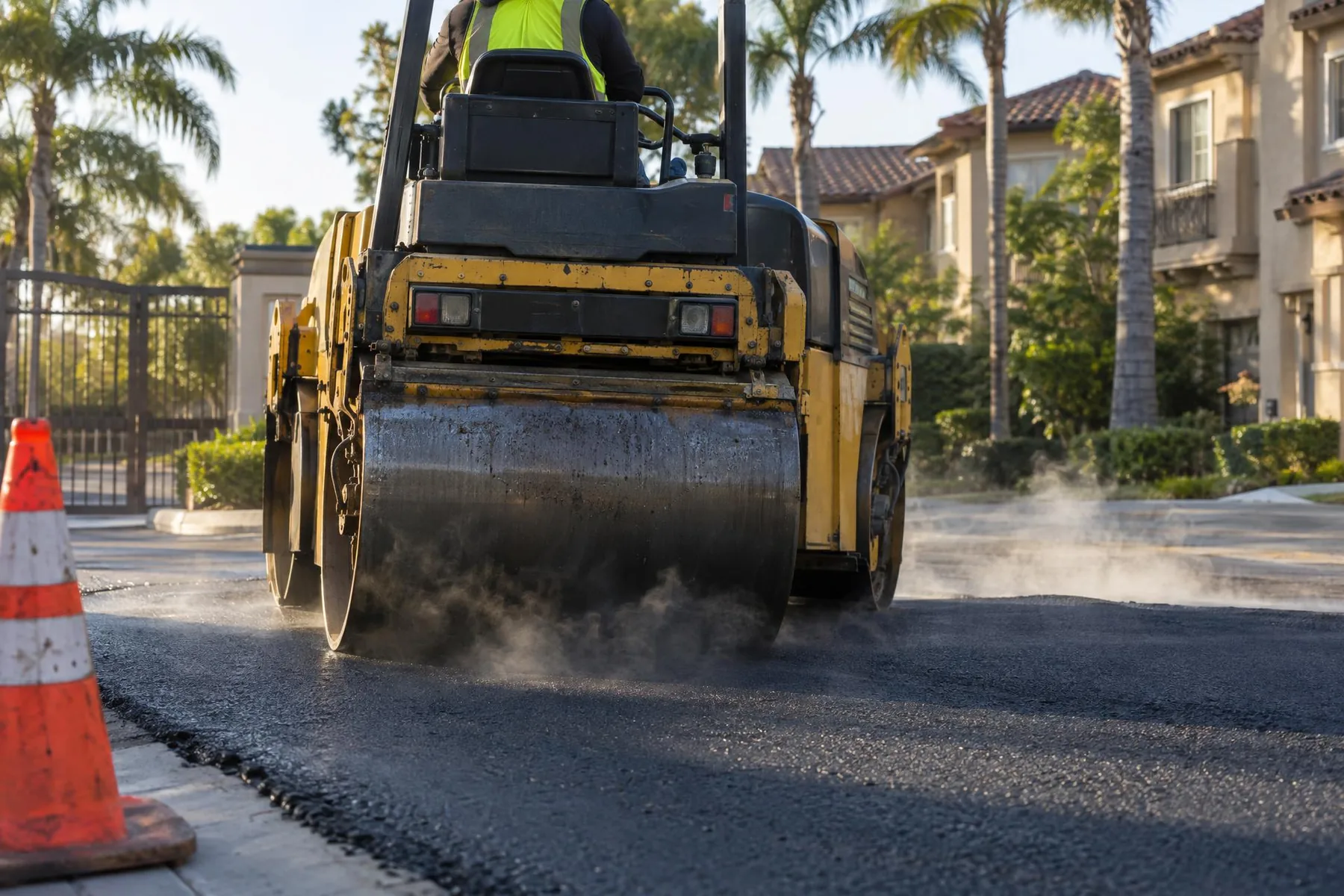
How Asphalt Paving Works: Why Coconut Creek Pavement Cracks First
Pavement looks simple from the street, yet it is a stack of layers. A home driveway’s asphalt is usually 3 to 5 inches deep and rests on a 4 to 8 inch bed of compacted rock that takes most of the weight. Let water soften that bed and tires start flexing the surface until it cracks. Drainage, base strength and compaction decide whether that happens.
Coconut Creek’s ground raises the stakes. NRCS maps Basinger, Hallandale, Margate and Pompano fine sands across the area, and during the wettest months groundwater climbs to about 6 inches below the surface. Immokalee sits near 12 inches, Pomello near 30 and Duette near 60, so one property can hold both wet and dry ground. A base this close to water weakens when soaked, which is why wheel paths crack first and potholes follow.
Rain adds to the strain. From May 15 to October 15, nearly 70% of the annual rainfall arrives, and the Broward County normal at Fort Lauderdale-Hollywood is about 56 inches a year. Any open crack gives that water a way into the stone, and stone that stays wet loses its grip and washes away, so small cracks deserve attention before summer. A South Florida paving contractor puts it simply: fix a drainage problem first or end up spending twice as much. The top coat gets the credit, but the layers underneath earn it. Sound stone, drains that work and thorough rolling are what keep a driveway smooth ten years from now.