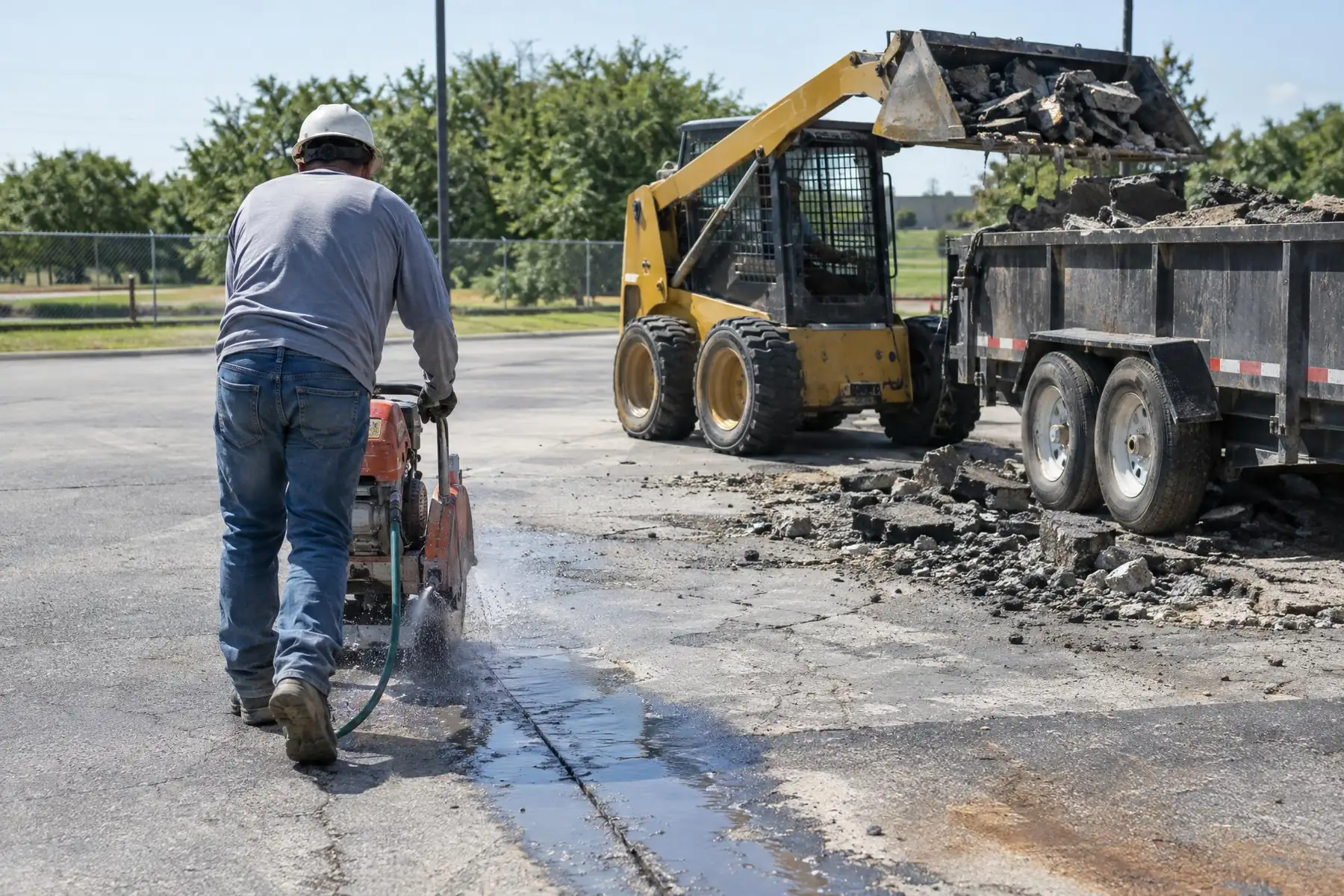
Worker running a cut-off saw along worn asphalt while a skid steer loads broken pieces into a trailer

Asphalt Sealcoating Experts in Coconut Creek Florida: Driveway Sealcoating and Parking Lot Sealcoating

Affordable Asphalt Sealcoating and driveway sealcoating in Coconut Creek, FL and Broward County

Coconut Creek Asphalt Paving & Resurfacing protects asphalt for homeowners, shopping centers and HOA boards in Coconut Creek, FL and across Broward County. Our asphalt sealcoating work includes the crack filling that has to come first, then driveway sealcoating for homes and parking lot sealcoating for properties with many cars. A coat of sealer shields pavement from sun, storms and oil drips for a small share of what a worn-out surface costs to replace. Property owners also call this seal coating or asphalt sealing, and it is the cheapest way to extend pavement life.

Why homeowners choose us:

  • Free written estimates for every paving job
  • Compacted base under every new surface, not just a layer of asphalt on top
  • Warrantied work every job backed by a written warranty
  • Licensed and insured certificate on request

The people on the crew have 15+ years of South Florida paving and 1,100+ driveways, lots and roads completed. A free written estimate names the number of coats before work begins, and the finished job is covered by a written warranty. Cracks are filled, borders are cut crisp and the site is cleaned, so the blacktop looks new again.

Get a FREE Asphalt Paving Quote

What Asphalt Sealcoating Involves in Coconut Creek, FL

Sealer only grips pavement that has been prepared properly, which is why the visible black coat is the last thing the crew does. Every item below that your property needs gets its own line on the estimate:

  • Washing and sweeping lifts off dust, sand and leaf litter, since sealer sticks to clean pavement and peels from dirty pavement.
  • Oil stain priming covers the drip marks under parked cars with a blocking layer, so the stains stay hidden after the finish dries.
  • Crack filling packs open splits with hot rubberized material to keep rain out of the stone underneath.
  • Driveway sealcoating covers the whole drive edge to edge, which darkens the surface and slows sun damage.
  • Parking lot sealcoating works one section at a time so customers and tenants can keep reaching the doors.
  • Border cutting draws a clean line where blacktop meets grass, curb or sidewalk.
  • Additional coats thicken the protective skin so it ages evenly, and your estimate says how many coats the surface gets.
  • Restriping afterward puts the stall lines and accessible spaces back on the pavement when the sealer is hard.

When You Need Asphalt Sealcoating in Coconut Creek

Sealer is maintenance, not repair, and it works best while the pavement is still in decent shape. Waiting until the surface is crumbling means you need paving instead of a coat. Watch for the signs below.

Signs Your Coconut Creek Asphalt Needs Sealcoating

  • A chalky, gray finish is the binder drying out, and a fresh coat restores both the color and the protection.
  • Thin cracks running over the pavement admit water to the base, and each one needs filling before any sealer is applied.
  • Dark drips and gas spots soften the asphalt where cars sit, and they widen if nobody treats them.
  • A sandy or gravelly feel underfoot shows loose stone being pulled out by tires.
  • The calendar matters too, since coats come every two to five years, sooner under heavy traffic and strong sun.

Why Asphalt Sealcoating Is Harder in Coconut Creek

Sealer is a thin layer, and in Coconut Creek it has to survive heavy rain, hot sun and damp ground. Four local conditions shape when and how it goes on, and each one affects how long the finish lasts.

Weather sets the schedule

Nearly 70% of the year’s rain falls from May 15 to October 15, and sealer needs dry pavement to bond. Jobs are timed for dry stretches, and a surprise shower can delay the final coat. Many owners schedule sealing in the drier months so the work is not interrupted, and the crew will not apply product onto damp pavement or ahead of a storm.

Damp sand beneath the pavement

NRCS maps Basinger, Hallandale, Margate and Pompano fine sands in Coconut Creek, and the water table in them climbs to about 6 inches below the surface in the wettest months. A base that wet can move, and every crack that opens above it needs filling before sealing. Otherwise the sealer bridges over the gap and splits along it within a few months, and the work has to be done a second time.

Water that sits on the surface

Low spots hold water and break down the sealer above them, so they are dealt with in advance. Where puddles stand, the crew levels the dip first. Sealing over a puddle spot only buries the problem under a coat that will not last, and the owner pays twice for the same patch of pavement.

Permits

Rules differ from city to city. We check with Coconut Creek for your address before starting and confirm what applies.

How Much Does Asphalt Sealcoating Cost in Coconut Creek, FL?

Sealing a driveway typically costs $281 to $862, with an average near $567 for a 1,000 square foot driveway. Your written estimate sets the real figure after we look at the surface.

JobTypical priceKey variables
Driveway sealcoating$281 to $862size of the driveway, condition, number of coats
Driveway resurfacing, overlay$400 to $1,200condition of the existing surface, overlay thickness
Patching and pothole repair$1,000 to $3,600number of repairs, depth of the damage
Parking lot striping$500 to $1,200number of spaces, accessible spaces, number of coats
Driveway repaving$1,600 to $4,000removing the old surface, condition of the base

Sealing is often scheduled with asphalt repair so the cracks are filled first, and lot owners usually add striping when the sealer has cured. If the surface is past saving, driveway paving is the better spend, and the asphalt paving cost page compares them.

Our Asphalt Sealcoating Process in Coconut Creek, FL

Sealcoating runs through five stages, and the weather has the last word on timing. Wet pavement or rain in the forecast pushes the application to the next dry window.

1. Estimate and Surface Check

You call and describe the pavement, and an estimator comes out to look at it. The crew checks the surface for cracks, oil spots and soft areas and measures the size. A free written estimate then spells out the crack filling, the coat count and any repairs required first, which puts cost and scope in writing before any sealer is mixed.

2. Cleaning and Crack Filling

Crews wash and sweep the surface until the dust is gone, then fill every crack with rubberized sealer. Oil spots get a primer so they cannot bleed through. This stage is the foundation of the coat, because sealer sticks to what is under it and not to the dirt on top. Anything skipped here shows up within a year.

3. Applying the Coat

Sealer goes across the surface with squeegees and spray equipment in even passes, and the borders are cut by hand along grass, curbs and sidewalks. On a lot the crew works in sections so the property stays open, and each finished section is coned off until it can carry traffic again without leaving tire marks.

4. Second Coat and Touch-Ups

When the estimate calls for a second coat, it goes on after the first has dried enough to take it. Missed edges, thin spots and any areas where sealer pooled are corrected before the crew moves on to the next section. A thicker, even finish wears longer and keeps its color through the summer sun and the afternoon storms.

5. Drying and Handover

The crew removes the cones and tells you when traffic can return. Plan on staying off a freshly sealed driveway for at least a day with a fast-drying product, and up to two weeks, depending on the sealer used. Your final invoice and the written warranty are filed together, and that paperwork closes the job.

Asphalt Sealcoating FAQs: Coconut Creek, FL

How much does asphalt sealcoating cost in Coconut Creek?

Sealing a driveway costs $281 to $862. Driveway size, surface condition and coat count push it up or down, and your estimate carries the real price.

How often should asphalt be sealcoated?

Your coat interval depends on wear, and guides disagree: a few say every two or three years, and others say three to five. New driveways get a first coat at roughly the six-month mark, and the schedule after that depends on wear and traffic.

How long before I can drive on a sealcoated driveway?

With a fast-drying sealer, about 24 hours is the minimum. Some sealers need up to two weeks before the surface sees normal use. The crew tells you what applies to the product used.

Is sealcoating worth the money?

On pavement that is still sound, it pays off. The cost of sealing is a small share of the cost of replacing worn asphalt, and a protected surface lasts longer. On a failing surface it only delays the inevitable.

Can sealcoating fix cracks in my driveway?

Sealer alone cannot, because a coat is thin and the crack keeps moving. Cracks are cleaned and filled with flexible rubberized material first, and then the coat goes over them.

Can it rain after sealcoating?

A short delay is fine once the sealer has set, but rain on wet product ruins the finish. Crews watch the forecast and book dry stretches, which in Coconut Creek means avoiding the heart of summer.

Does Coconut Creek require a permit for sealcoating?

Rules differ by city and job type. The crew checks with Coconut Creek for your address before work starts and tells you what is needed.

Can you sealcoat a parking lot?

Parking lots are a regular part of the work. Sections are sealed one after another so tenants and customers can still park, and striping is repainted once the sealer has cured.

Coconut Creek Asphalt Paving & Resurfacing serves Coconut Creek and Broward County.

Get a Free Asphalt Sealcoating Quote in Coconut Creek, FL

(954) 466-0135 Get a Free Quote